The Lab
Work-in-progress ideas, broken shaders, and visual tests—some unfinished, some fully realized, all experimental.
All

Nothing found...
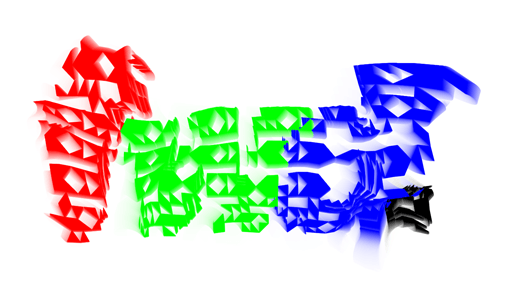
Voxelized 3D Logo Animation | Three.js Shader Experiment
A 3D logo shifts through voxel-like patterns, flowing distortion, and motion trails in this Three.js shader experiment.

Clouds Illusion
An immersive WebGL experiment featuring a cinematic mountain landscape beneath dynamic volumetric clouds. Real-time shaders, atmospheric lighting, depth, and responsive camera movement create the illusion of drifting through an expansive natural environment.
Mouse Trail Difference
An interactive WebGL experiment where fluid motion follows your cursor and blends with bold typography in real time.
Nice Ribbons
Animated 3D ribbons are generated from a procedural curve, textured on both sides, lit in real time, and smoothly moved through UV scrolling to create a flowing motion effect.
GPGPU Particle Swarm
Interactive Three.js particle swarm experiment powered by GPGPU simulation, where thousands of particles flow through curl-noise fields to create fluid, organic, stream-like motion in real time.
GPGPU Particles
Real-time WebGL experiment where a 3D mesh dissolves into thousands of particles simulated entirely on the GPU. Using ping-pong framebuffers and custom GLSL curl-noise motion, it delivers fluid, high-density particle behavior with interactive camera controls and live tuning.
Scattering Flow Fields
Scattering Flow Fields is an interactive Three.js experiment where procedural curl-noise tubes are animated with custom GLSL shaders and lit with diffusion and scattering-style effects driven by a live cursor-controlled light.
Noisy Strokes
Real-time Three.js + GLSL experiment that transforms a 3D mesh into animated procedural RGB stroke patterns with grainy noise, smooth transitions, and dynamic shader-driven motion.
Earth Flight Paths with Animated Shader Dashes (City-to-City Globe)
3D Earth in Three.js with glowing city markers and animated curved routes between cities like Bucharest, Madrid, Moscow, Los Angeles, and Rio de Janeiro ( if course the routes can be set anywhere).
Particle Trails on SVG Paths (RGB Triangles + Additive Glow)
Animated particle trails that follow SVG paths in Three.js, with per-triangle RGB coloring, additive blending, and real-time shader effects.
Depth Texture Experiment
Depth-driven line distortion experiment in Three.js + GLSL: a 3D face is rendered to a depth texture, then used to deform animated line vertices in real time with simplex noise for organic motion.
Recursive Trail Ping‑Pong
WebGL ping‑pong render‑target feedback demo that accumulates an upward-moving trail on a fullscreen quad.
Raymarching SDF Shapes – Soft-Min Color Blends
Real-time raymarched SDF sphere, box, and icosahedron with smooth color blending and Fresnel lighting.
Particles Transition Bloom
Morphs images into GPU-driven particles with curl-noise motion and bloom that peaks mid-transition.
Particles Transition
GPGPU particle image transition with a smooth uProgress morph, midpoint explosion, and optional GPU depth sorting.
Jellyfish Wrap
WebGL/Three.js experiment where jellyfish drift upward in an endless loop, seamlessly wrapping back below the scene with subtle depth-aware timing for smooth, continuous motion.
Iridescent Material
Holographic, color-shifting look using Fresnel and animated noise flow.
ASCI Post-Processing Effect
Custom ASCII post‑processing effect in Three.js using EffectComposer + RenderPass + a custom ShaderPass.
CPU Side Ribbons
Interactive RGB ribbon trails in Three.js with smooth motion, randomized patterns, no custom shader ribbon material.
GPGPU Galaxy Particles
Millions of particles simulated on the GPU with custom GLSL shaders for smooth, swirling space motion.
Plane With GPU Flowmap Distortion
Interactive image distortion driven by a GPU flowmap, with click-based plane deformation (GSAP) and a motion-only RGB split in postprocessing.
GPGPU Particles Wall
Particle experiment using GPU FBO simulation and optional depth sorting, with noise-driven motion and point-sprite rendering.
Mouse Flowmap Distortion
A GPU flowmap is a ping‑pong texture that stores mouse-driven motion vectors and trail strength, letting us create smooth, fluid-looking distortion in real time.
Seamless RGB Stripes Shader
A GLSL shader demo with smooth, animated RGB stripes and a glass sphere showing reflection and refraction.
FBO Mouse Trail
Interactive Three.js/WebGL mouse‑trail made with a canvas brush texture + ping‑pong FBO feedback shader for fluid distortion and animated color.

Shader-Based Mesh Extrusion
An interactive extrusion effect where mouse movement pushes mesh vertices forward, while the fragment shader blends multiple layers to simulate light and shadow.
Crazy Bird
A GPGPU particle emitter applied to an animated 3D model, enhanced with a barycentric shader material effect.
Realistic Sun
Realistic Sun featuring a three-layer noise system for the solar surface, enhanced with dynamic rays and sun flares.
Fire & Smoke Particle Simulation
Fire and smoke particles simulation experiment using GPGPU and a custom-built particle system.
Logo Particles Simulation
GPGPU particle simulation on my logo. Use the slider in the top-right corner to control the particle flow intensity.
Snow Particles Simulation
Snow particles simulation experiment using GPGPU and a custom-built particle system.
Fireworks Particles Simulation
Fireworks particles simulation experiment using GPGPU and a custom-built particle system.

Future Web Design was born out of pure passion. In the early 2000s, using only a browser, Tibi began experimenting with Adobe Flash. From there, things naturally progressed, leading to the creation of standalone applications and websites. For me, this is not just work – I genuinely love what I do.
Contact information
Phone: +00744484259
Address: 35 WARFIELD RD - BEDFONT - LONDON
Email: tibi@fwdapps.net
© Future Web Design - 2026

